Why Radon in Basement Levels Are Often Highest and What to Do About It
When homeowners ask about testing for radioactive gas, the conversation almost always starts with the lowest level of the house. That is not a coincidence. Radon enters through the soil and moves upward, so the space with the most direct contact with the ground usually has the highest concentration. That means the radon in basement reading is almost always the most important number to understand.
I have spent years working with radon measurement and mitigation in the St. Louis region, and I have seen how common it is for people to test only on the main floor and assume they are safe. That assumption can be dangerous. The EPA radon zone map puts much of Missouri in Zone 1, the highest risk category, and St. Louis radon hot spots are well documented. If you have a basement, you need to test it properly and understand what the results mean.
How Radon Moves Into a Basement
Radon is a natural decay product of uranium in the soil. As uranium breaks down over millions of years, it releases radon gas into the soil pores. That gas moves through the ground along paths of least resistance. When you dig a basement, you create a large cavity in the earth, and the pressure difference between the house interior and the soil naturally draws radon gas indoors. This is why the radon in basement concentration is typically two to three times higher than on the first floor, and sometimes much more.
The entry points are everywhere. Cracks in the slab, gaps around pipes, sump pits that are not sealed, and even the porous surface of a gypsum concrete subfloor can allow the gas to pass through. I have tested homes where the basement was finished beautifully with carpet and drywall, and the owner was shocked to find radon levels over 20 picocuries per liter. The gas does not care about your decor. It follows the pressure gradient.
Testing: Short-Term or Continuous?
If you have never tested for radon, start with a short-term radon test. These are inexpensive and widely available. You place the detector in the lowest lived-in area of the house, leave it for two to seven days, and send it to a lab. The result gives you a snapshot. But a snapshot has limits. Radon levels fluctuate with weather, soil moisture, and even how often you run your HVAC system.
For a more reliable picture, I recommend a continuous radon monitor. These devices sit in the basement for weeks or months and record hourly readings. They show you the peaks and valleys that a short-term test might miss. I once worked with a family in a suburb near the Missouri River whose short-term test showed 3.8 pCi/L, barely below the EPA action guideline of 4.0. Their continuous radon monitor later revealed that levels spiked above 10 pCi/L during winter storms. They would have never known with the single test.
If you are buying or selling a home, a short-term test is the standard, but for your own peace of mind, a longer monitoring period is better. And always test the radon in basement space, not the main floor. Testing the wrong location is a common mistake.
Mitigation Approaches That Actually Work
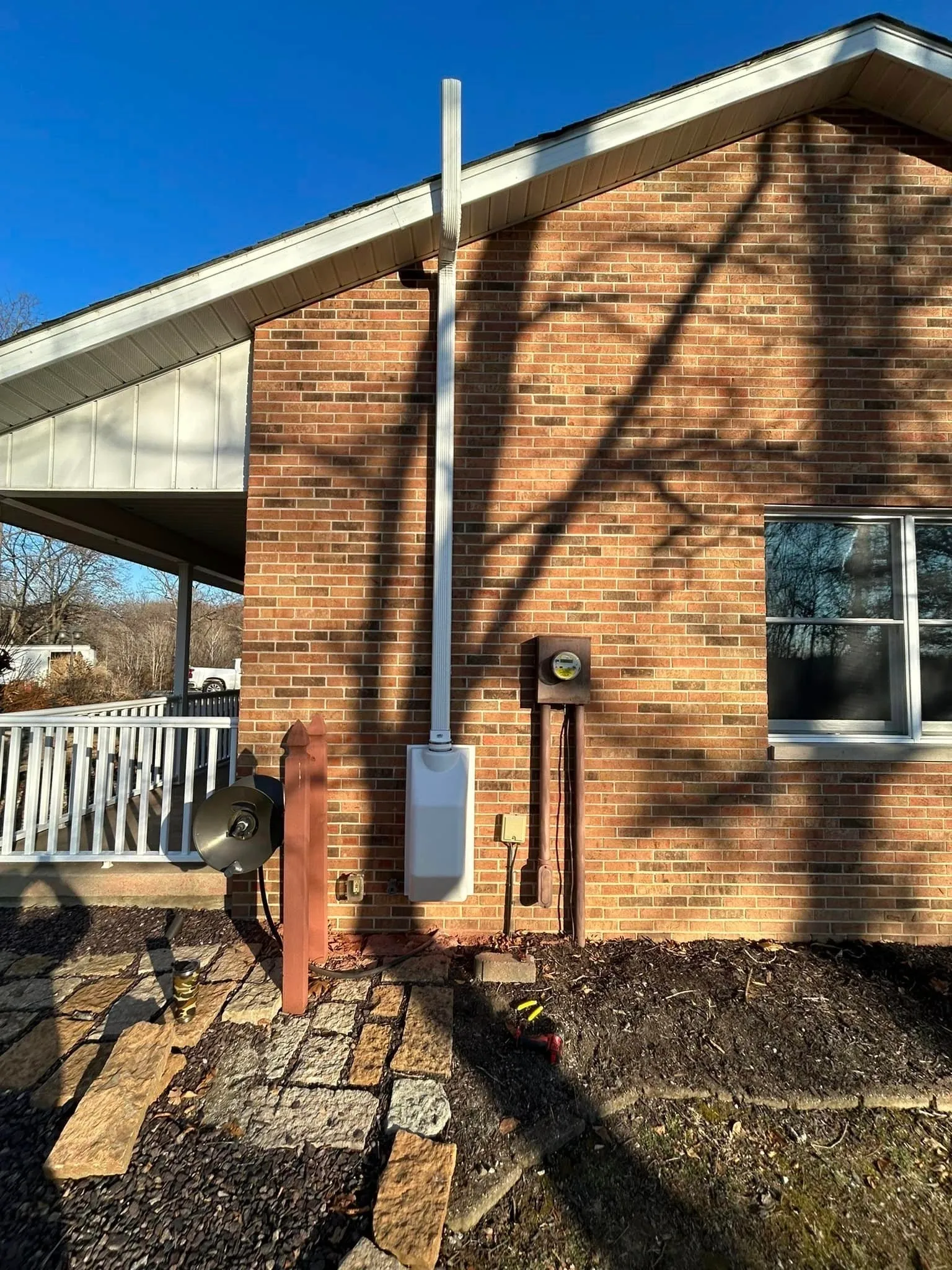
Once you know you have a problem, the next step is mitigation. The most common and effective method in our region is sub-slab depressurization. This involves drilling a small hole through the basement floor, digging out a sump pit below the slab, and running a PVC vent pipe from that pit up through the house to the roof. A radon mitigation system fan is installed in the attic or on the exterior wall to create continuous suction under the slab. This pulls the radon-laden soil gas away from the house and vents it safely above the roofline.
There is also a simpler option called a passive sump system. It works the same way but relies on natural stack effect and wind pressure instead of a fan. In many homes, especially in Kansas City radon levels I have studied, a passive system does not reduce concentrations enough to meet the EPA guideline. That is why most radon mitigation contractors in the St. Louis area install active soil depressurization systems with a fan. The fan adds reliability.
New construction offers an even better path. Radon-resistant new construction techniques include placing a layer of gravel under the slab, a vapor barrier, and a stub of PVC pipe that can be capped or connected to a fan later. These measures are cheap during building and expensive to retrofit. If you are building a home, ask your builder for a passive sump system rough-in. It saves money and hassle.
Post-Mitigation Verification
After a system is installed, a post-mitigation radon test is essential. You need to confirm that the levels have dropped below 4.0 pCi/L, and ideally below 2.0. The testing should be done by a professional who follows the protocols of the National Radon Proficiency Program. I have seen systems that looked perfect but had a crack in the PVC vent pipe hidden in the wall cavity, and the radon levels stayed high until we found it. Testing is the only way to know.
Most reputable companies offer a radon mitigation system warranty that covers parts and labor for at least five years. The fan itself may need replacement after five to ten years, depending on the model. Ask about the warranty before you sign a contract.
Other Factors That Affect Basement Radon
Radon in basement levels can also be influenced by your HVAC system. An air exchanger that brings in outdoor air and exhausts indoor air can reduce pressure differences that pull soil gas indoors. But it can also increase your heating and cooling bills. There is a trade-off. I usually recommend sealing the major entry points first, then installing sub-slab depressurization, and only then considering an air exchanger if levels remain borderline.
Another less common concern is radon in water testing. If your home uses a private well, radon can dissolve into the water and be released when you shower or run the tap. This is a separate issue from soil gas, but it can add to the total inhalation risk. The EPA has a separate guideline for waterborne radon. If you are on a well in an area with known radon, it is worth testing the water too.
Why St. Louis Homeowners Should Act Now
The St. Louis radon hot spots I have mapped over the years are not random. They follow the ancient river terraces and limestone bedrock that underlie much of the metro area. Some neighborhoods in West County and along the Mississippi bluffs have average basement readings above 8 pCi/L. That is double the action level. Waiting does not make the gas go away. It only increases your exposure to radon gas decay products, which can damage lung tissue over time.
Testing is simple and cheap. Mitigation is a one-time investment. I have never met a homeowner who regretted fixing a radon problem, but I have met plenty who wished they had tested sooner. If you have not tested the radon in basement level in your home, do it this season. Your lungs will thank you.
And if you are in Kansas City or St. Louis and you need a qualified radon mitigation contractor, look for someone certified through the National Radon Proficiency Program. Ask for references. Ask to see post-mitigation test results. A good contractor will be happy to share them.